
5 Best API Documentation Tools for Developers (2026)
We migrated a real project between three of these tools and ran the rest against our OpenAPI spec. Honest takes on the five API documentation tools worth considering in 2026.
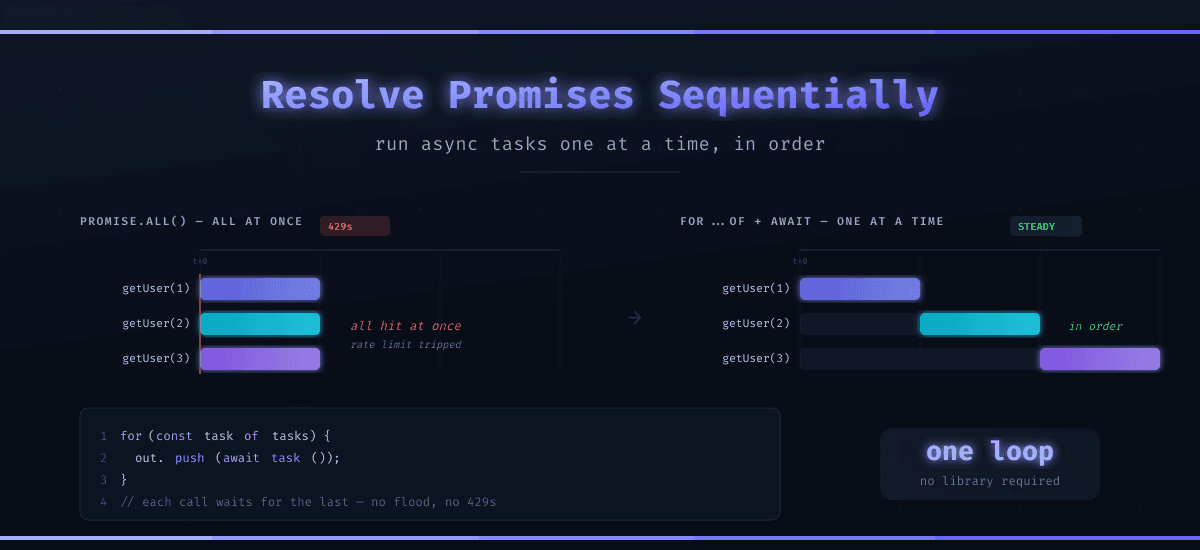
How to Resolve Promises Sequentially in JavaScript
In JavaScript, the Promise.all() function is one of your best tools when you want to do async work. You can fire everything off, wait for the slowest one to complete, and then continue processing. However, sometimes running it all at once is exactly what breaks production. When you need promises to run in order, one finishing before the next begins, the answer is a for...of loop with await inside it. Easy right? Well, the catch is a subtlety that bites almost everyone the first time; if you've
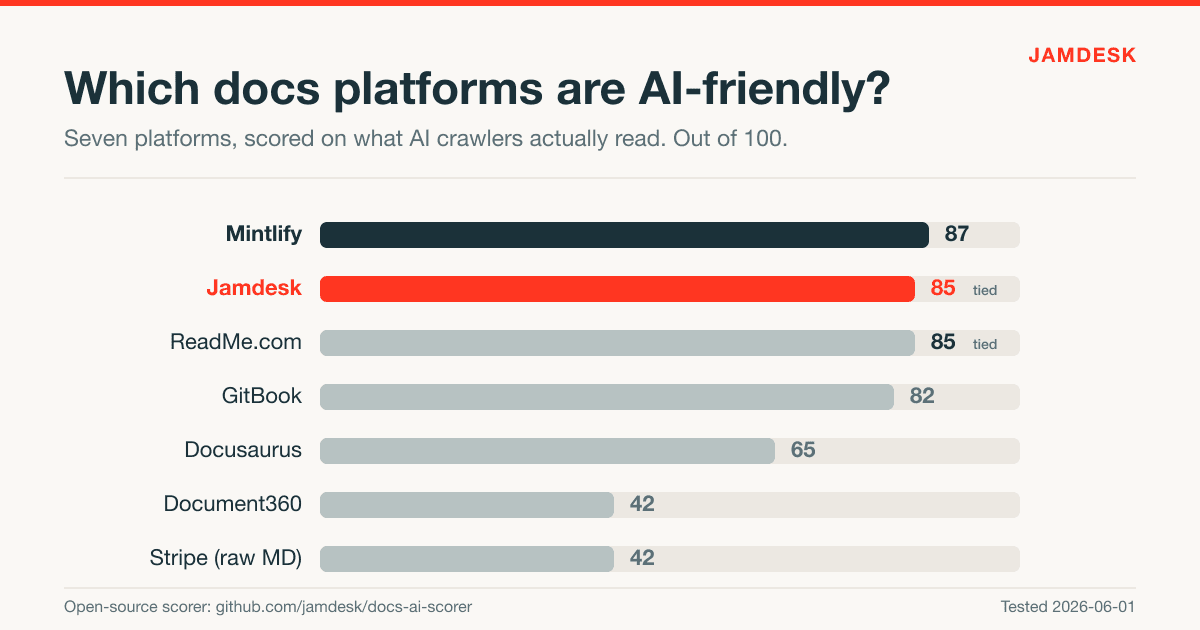
Which docs platforms are AI-friendly? We scored seven.
We wanted a measurable number on which docs platforms are AI-friendly, and honestly to see how Jamdesk stacks up against the competition. So we wrote a small Node.js script that probes a documentation software docs site for the things AI crawlers and agents actually care about: server-rendered HTML, a content-to-chrome ratio, discovery files like llms.txt, a .md-endpoint convention, robots.txt posture, and the ratio of repeated boilerplate between pages. Then we layered a manual answer-quality r
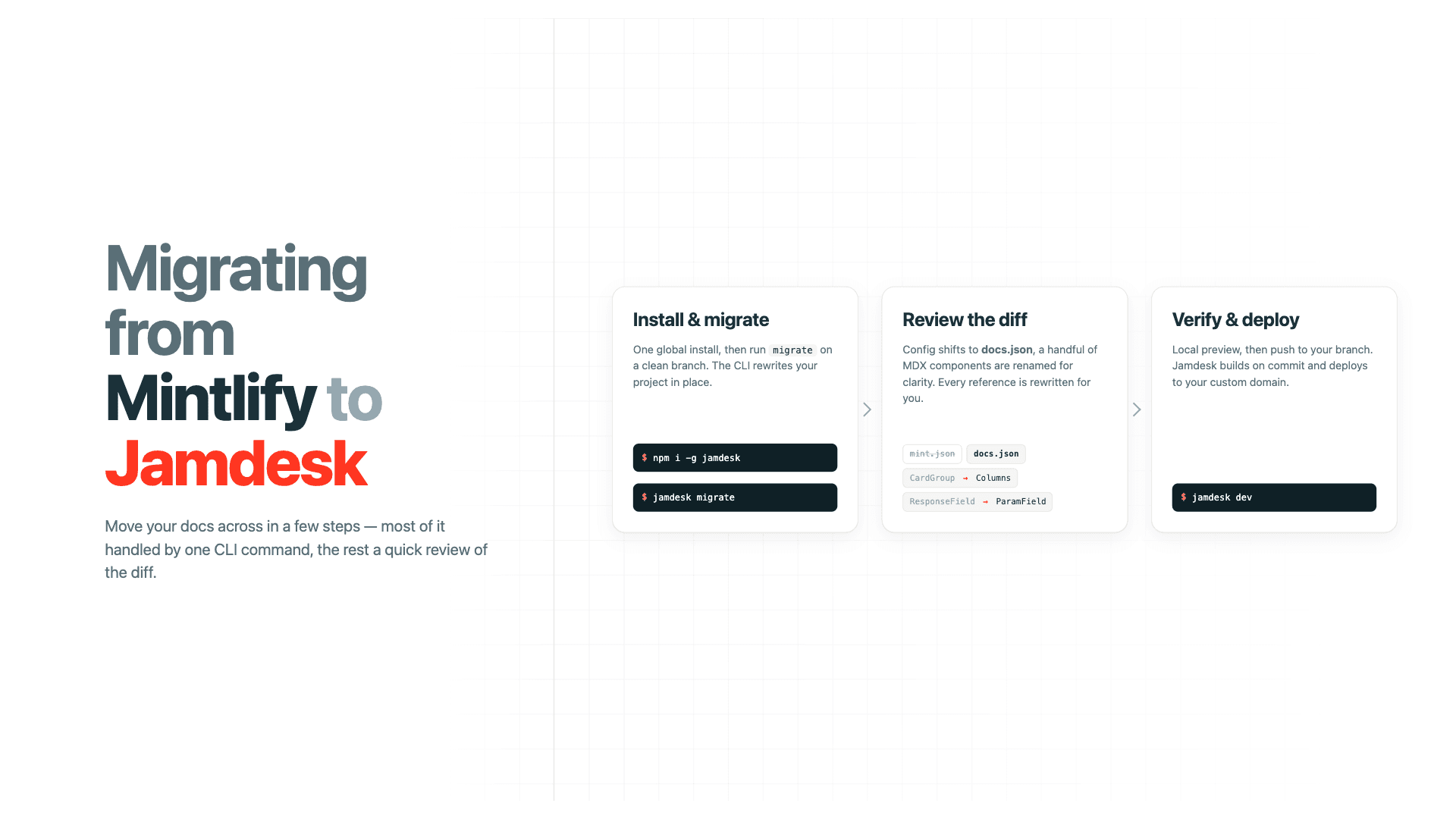
Migrating from Mintlify to Jamdesk
What the Jamdesk CLI rewrites when migrating a Mintlify docs repo, what to verify in the output, and the one component (snippets) still requiring a manual conversion.

Best GitHub Alternatives in 2026
GitHub has been getting a lot of bad press recently - some not deserved, but a lot is. If you look at Hacker News' front page, almost daily there is a report of GitHub having an outage or why such and such company is leaving Github. For example, Mitchell Hashimoto of Ghostty terminal, awesome tool by the way, recent posted about leaving Github with tears in his eyes. So, it seems to be the time to look into GitHub alternatives. Are they worth it, do they give you the same capabilities, and cost

Why Your API Docs Are Your Most Important Marketing Tool
My co-founder and I ran an API company for years. We built social media APIs, sold them to developers, and competed against companies with bigger teams and deeper VC pockets. We won more than we lost, and when I look back at why, it wasn't just the API. Plenty of competitors had comparable endpoints. And it wasn't our pricing. It was our API documentation. That sounds like a strange thing to say, but if you've ever sold a developer tool, you know exactly what I mean. Developers don't sit throug
![The Definitive API Documentation Pricing Comparison [2026]](/_next/image?url=https%3A%2F%2Fcms.jamdesk.com%2Fcontent%2Fimages%2F2026%2F04%2Fchart-1-hero-v2-1.png&w=3840&q=75)
The Definitive API Documentation Pricing Comparison [2026]
What eight platforms actually cost when you factor in seats, AI add-ons, and the features you will need six months from now. Executive Summary API documentation platforms have reached broad feature convergence. Most established players now offer OpenAPI rendering, markdown-based editing, custom domains, and some form of AI-powered search or chat. Yet behind this surface-level similarity, pricing structures diverge sharply. Two platforms offering nearly identical capabilities will produce twel

Introducing the Jamdesk Podcast
We launched the Jamdesk Podcast this week. Boris and Geoff, the co-founders of Jamdesk, host the show. The first episode runs under eight minutes and covers how Jamdesk works, who we built the product for, and what shipped recently. Why We Started a Podcast Developer tools move fast. New features ship, pricing changes, and best practices shift. A podcast gives you a direct line to what we're building and why, without wading through release notes or marketing pages. We wanted a format where y

JavaScript Promise.all() and Promise.allSettled() in Practice
Stop awaiting async calls one after another. Promise.all() runs them concurrently, finishing in the time of the slowest call. Real-world examples, error handling, and when to use allSettled instead.