We use cookies for analytics. Learn more

GitHub has been getting a lot of bad press recently - some not deserved, but a lot is. If you look at Hacker News' front page, almost daily there is a report of GitHub having an outage or why such and such company is leaving Github. For example, Mitchell Hashimoto of Ghostty terminal, awesome tool by the way, recent posted about leaving Github with tears in his eyes. So, it seems to be the time to look into GitHub alternatives. Are they worth it, do they give you the same capabilities, and cost

My co-founder and I ran an API company for years. We built social media APIs, sold them to developers, and competed against companies with bigger teams and deeper VC pockets. We won more than we lost, and when I look back at why, it wasn't just the API. Plenty of competitors had comparable endpoints. And it wasn't our pricing. It was our API documentation. That sounds like a strange thing to say, but if you've ever sold a developer tool, you know exactly what I mean. Developers don't sit throug
![The Definitive API Documentation Pricing Comparison [2026]](/_next/image?url=https%3A%2F%2Fcms.jamdesk.com%2Fcontent%2Fimages%2F2026%2F04%2Fchart-1-hero-v2-1.png&w=3840&q=75)
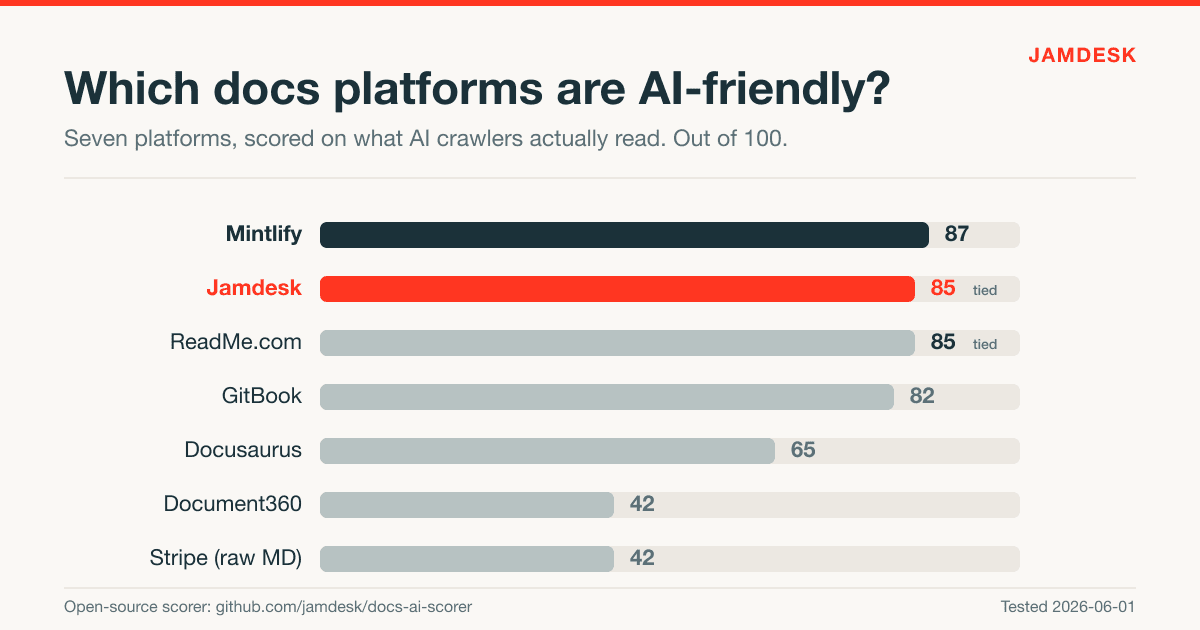
What eight platforms actually cost when you factor in seats, AI add-ons, and the features you will need six months from now. Executive Summary API documentation platforms have reached broad feature convergence. Most established players now offer OpenAPI rendering, markdown-based editing, custom domains, and some form of AI-powered search or chat. Yet behind this surface-level similarity, pricing structures diverge sharply. Two platforms offering nearly identical capabilities will produce twel

We launched the Jamdesk Podcast this week. Boris and Geoff, the co-founders of Jamdesk, host the show. The first episode runs under eight minutes and covers how Jamdesk works, who we built the product for, and what shipped recently. Why We Started a Podcast Developer tools move fast. New features ship, pricing changes, and best practices shift. A podcast gives you a direct line to what we're building and why, without wading through release notes or marketing pages. We wanted a format where y

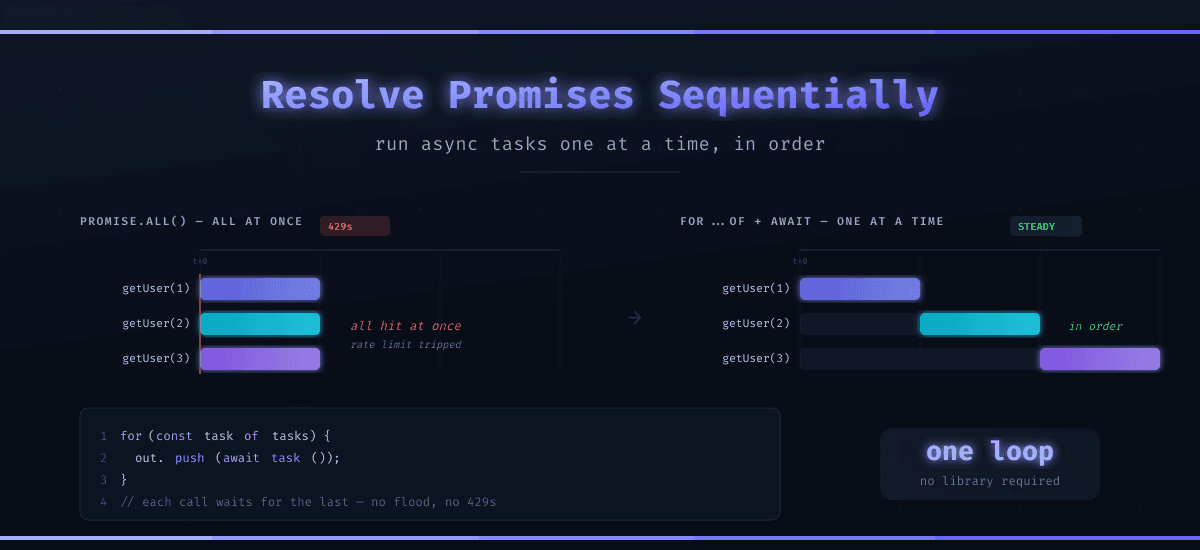
Stop awaiting async calls one after another. Promise.all() runs them concurrently, finishing in the time of the slowest call. Real-world examples, error handling, and when to use allSettled instead.

As a Node.js developer, you probably know AbortController as the built-in API that cancels fetch(). If you're not familiar with it, AbortController is an API interface that allows you to cancel web request. I've always seen it as a peculiarity, and honestly detriment, of fetch() not natively supporting cancel or other advanced features like axios. Why do I need to instantiate another class to pass to fetch()? However, over time I learned AbortController does a lot more than just cancel. AbortCo

PageSpeed Insights gives you four scores and dozens of metrics. Most of them don't matter. Here's what does, for both Google and the AI crawlers that are quickly becoming just as important.

Stop manually blurring screenshots. Use AI to detect sensitive text and ImageMagick to redact it in one command.

We migrated a real project between three of these tools and ran the rest against our OpenAPI spec. Honest takes on the five API documentation tools worth considering in 2026.